The OpenAI Security Case: Security Must Extend to the Physical World
Imagine a conference room where teams discuss important research and product strategy. Even with restricted document access and controls on file transfers from company PCs, what happens if a small recorder hidden behind the television captures the conversation?
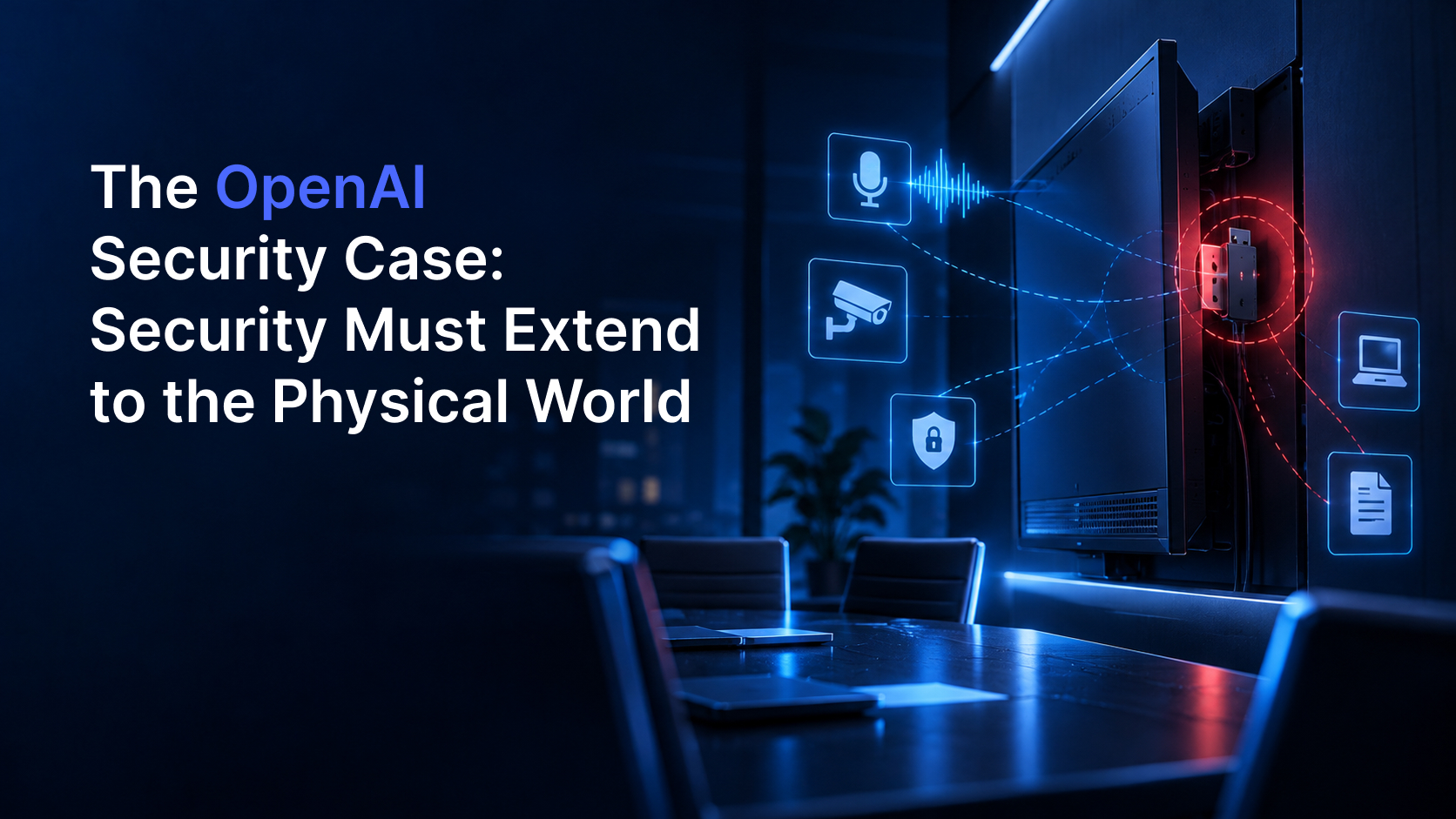
The discovery of a recording device at OpenAI, disclosed in October 2026, brought this question into focus. According to the U.S. Department of Justice, a concealed recorder was found plugged into a USB port behind a television in an OpenAI conference room. An employee was arrested on a charge of using or attempting to use a device to unlawfully intercept conversations.
Should this be treated as an exceptional incident limited to an advanced AI company? Other businesses also hold valuable information in their conference rooms and on employees' PCs. Product discussions, screens displaying customer information, and devices placed near work equipment all create potential points of exposure.
Enterprise security must address both online data movement and information gathering in the physical world. This case is a reason to consider endpoint security alongside the environment in which devices are used, as well as the files and processes running inside them.