Monitor Dog

Get the first look at Monitor Dog’s latest features and updates. Discover how our product is evolving to create a safer and more efficient workspace.

Security
|
13 min read

EDR vs. SIEM vs. SOAR: MonitorDog's Integrated Detection, Analysis, and Response

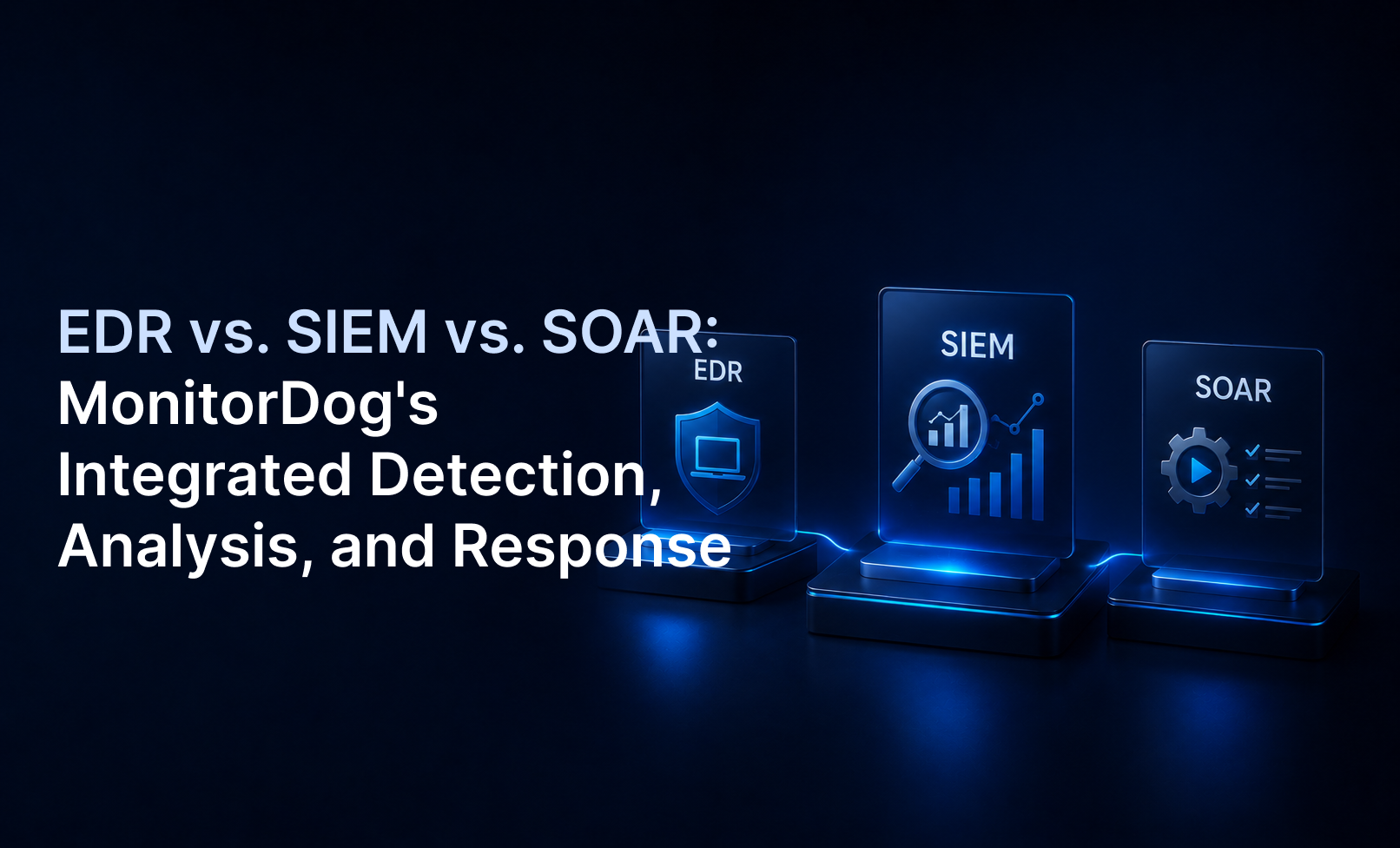
When organizations strengthen their security posture, three terms come up frequently: EDR, SIEM, and SOAR. All three contribute to threat detection and incident response, so they may appear similar. In practice, however, each observes a different scope and serves a different role.

In simple terms, EDR looks deeply into endpoints such as PCs and servers, SIEM brings security data from across the organization together for analysis, and SOAR connects and automates repetitive response procedures after a threat is detected.

MonitorDog integrates these three operating approaches within screen security. It detects security issues at the endpoint and takes immediate action, centrally manages events from multiple users and devices through a dashboard, and classifies suspicious activity or triggers responses such as screen locking according to administrator-defined scenarios.

Security
|
8 min read

Preventing Technology Leaks in Manufacturing R&D: Design Drawings Can Leak from Screens, Not Just Files

In a manufacturing R&D organization, a technology leak rarely stays inside the security team. It can affect a new product launch schedule, expose cost structure, damage supplier relationships, and weaken patent strategy. Design drawings, circuit diagrams, BOMs, test photos, process conditions, and mold data may look like separate documents. Together, they become something closer to a map for recreating a product.

That map does not leak only as a file. Someone may never copy a CAD file, yet still photograph a PLM screen with a smartphone. The same applies to test results on lab equipment, a parts list in a supplier portal, or a large screen in a design review room. The fact that data has not left a file repository does not mean the information has stayed safe.

Security
|
10 min read

UEBA and MonitorDog: Extending Insider Anomaly Detection to Screen Security

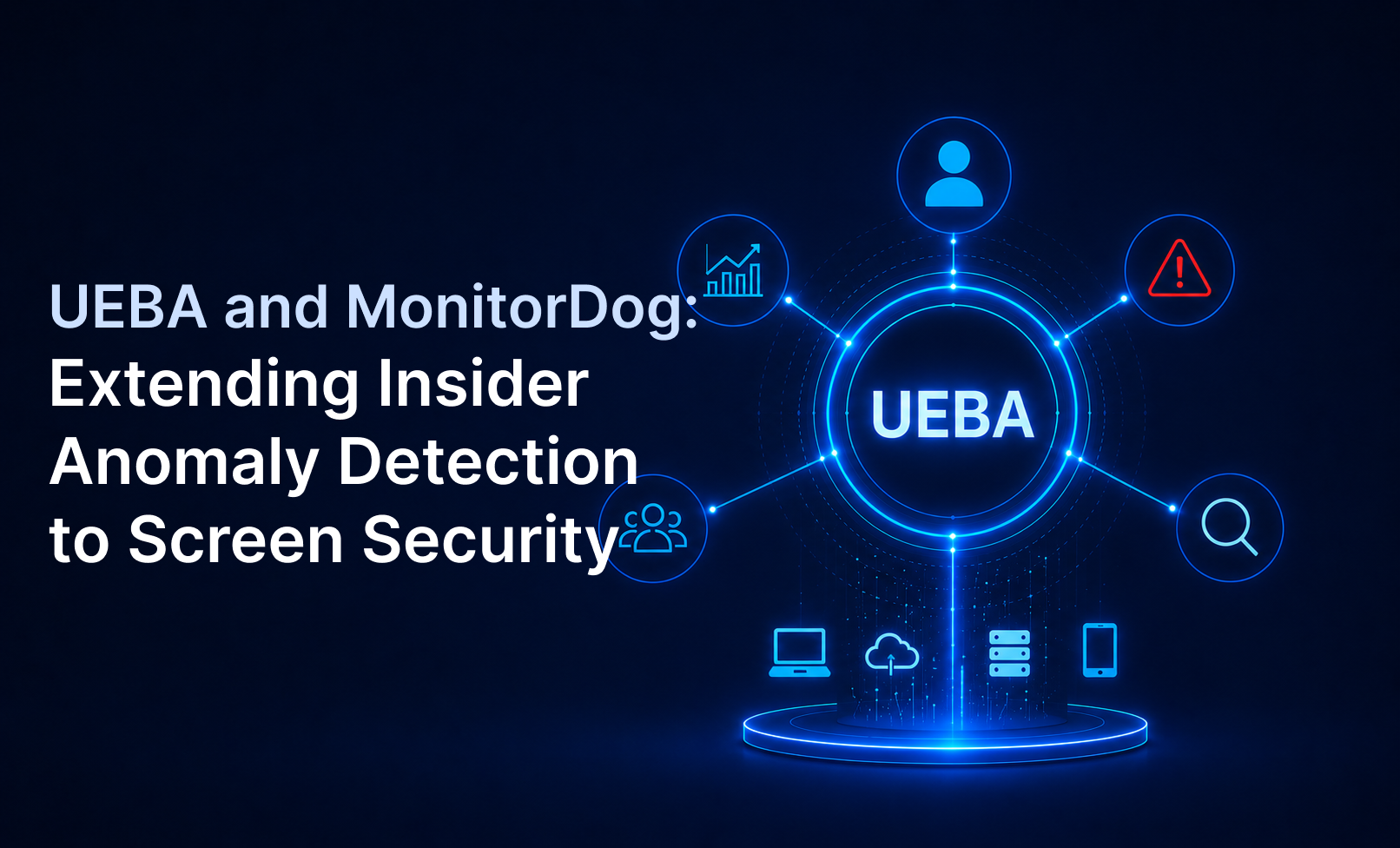
Security incidents do not always begin with an external attacker breaking through a firewall. A departing employee viewing customer records, a contractor account logging in at an unusual time, or an authorized user photographing a sensitive screen with a smartphone can all become very real threats.

This is where UEBA (User and Entity Behavior Analytics) often comes into the conversation. In simple terms, UEBA is about moving beyond the question, "Does this user have permission?" and also asking, "Is this behavior different from what is normal?"

Security
|
7 min read

What Is Zero Trust? Understanding It Through Screen Security

"Zero Trust" has become one of the most common terms in cybersecurity. But in real-world conversations, it is still often understood too narrowly as "removing VPNs" or "authenticating users multiple times."

Zero Trust is not a single technology. It is an operating principle: do not trust any user, device, or location by default. When you follow that principle all the way through, you inevitably arrive at one fundamental question: when an authorized user has a sensitive screen open, can we really trust what is happening in front of that screen?

Security
|
6 min read

Screen Security Strategies for Call Centers and Financial Institutions

A call center agent pulls up a customer's account number, national ID, and loan history — all on screen — while taking an inbound call. A smartphone sits on the desk beside the monitor. At that moment, no DLP alert fires. Call centers and financial institutions handle the most concentrated volumes of customer personal data, yet they often carry the most structurally vulnerable screen security posture.